[about the ensemble Kommun] It’s the concept of using the ensemble as one organism, so you improvise phrases together.
Organic metaphors in free improvisation
A collection of quotes using organic metaphors to describe free improvisation.
Locatelli’s group Pipeline functions like a single organism, nurturing the poetic germination of each piece and letting it grow, gracefully or pithily as required.
Their live performances embrace the principles of improvisation, allowing the music to evolve organically in response to the moment, the space, and the audience.
Without a score or pre-planned reference points, the group shape an organic whole.
The band works together on a “wall of sound” and unfolds its music like a single organism.
While it’s possible to split the music into Shipp’s stout structural and massively sonic contributions, and Perelman’s flights of exquisitely and ardently voiced expression, that misses the extent to which they become a single organism.
It is a celebration of the individuality of the each of instrumentalists, as well as the unusual fusion of all five into one perfect organism.
All of the pieces in this album are the result of a constant agglomeration and separation of sonic fragments evolving and dying just like living organisms.
The music flutters ceaselessly like the wind blowing through trees or water cascading through a stream, a trickle of constant, gentle sound. I looked at the barren trees and the nascent buds on some of the bushes. […] The effect is a blending of organic and non-organic sounds that unfold in a subtle tone-poem.
Este corpo de três elementos existe e move-se numa simbiose tímbrica e estética que os transforma num elemento só.
The result is an almost organic sonic experience. It is the bubbling organic mass that once produced life, the scraping of tectonic plates, the rumbling sounds that create geisers deep under the earth’s crust, the sound of wind against rocks, the sound of leaves of grass rubbing against each other, of small creatures in the undergrowth, of deep moaning sounds of other animals, the chirping of ciccadas. No matter. It lives. Complexity emerges from simple things, and it gets a life of its own, something deeply organic. Something out of thin air. The trio create life out of sound.
They manage the listening experience by introducing minor repetitions, things to hold on to, like little sonic strings of DNA, even if the rest of the sounds are unclear and hard to discern and hard to predict. You - as the listener - experience surprise after surprise in this unfamiliar environment. But even if things are strange and unpredictable, they have deep roots in life itself, deeper than music, deeper than feelings, deeper than reason, deeper than evolution, deeper than any form of organisation. It exists. It breathes. It interacts. It creates.
Rather quickly into this piece, the music felt like one organism, with the different members of the band acting like limbs of that central sonic being, one with three sides, three perspectives, three legs, three arms, moving and contracting, expanding and shifting in multiple directions all at once.
An occasional response of listeners during the tour was that Craig and I, in performance, were not so much two different musicians as one sort of shape-shifting organism.
Nightshades lives and breathes like an organism–emerging, developing evolving, and rising to great heights before receding, transforming listeners in its wake.
Unfolding as slowly as a blossom in real time, the pianist’s initial out-of-tempo exposition is quickly deconstructed into brittle key chopping.
The synthesis with bass in the middle and stereo guitar lines makes it sound like one organism.
As the strident whistles and sul ponticello lower-pitched tones connect to form a multi-cellular organism, the sections are squeezed into a profound tension-released whole.
The musical organism gradually coalesced from individual voices and once fused, they remained locked in, all four players bouncing off each other in constant forays, feints, and strikes.
Throughout writing this review, I found it impossible to avoid organic metaphors.
Perelman put the pieces in a certain order after the fact in such a way that it resembles a multi-movement suite, but an array of connected organisms might be a better description. Like real organisms, these songs breathe and goes through stages.
It is primal, open, welcoming notes as they sprout out of the instruments, without force, with being forced, almost without intention, as if by themselves, out of an organic or natural necessity. […] I cannot say it differently, this is quiet, cautious, intense organic music, full of depth and beauty.
It is transformed, patiently and organically, from spare and light articulations into intense, physical sonic crescendos, without ever losing its cohesive power.
The music flows organically, growing as it moves along, with instruments coming and going, like birds or bees passing by, coming and going, yet all taking part in the same unpredictable yet not unfamiliar scenery. Despite the apparent freedom, it all sounds very focused and coherent and it was possibly discussed before playing, or maybe not, and these four stellar musicians are just so good and so used to playing together, that this symbiosis of fragile and raw sounds might have been created spontaneously. […] The music is moving without being sentimental. It has nothing of traditional music, yet it is drenched in familiar sounds that are organised differently, not around structure but around each other, growing organically, with subtle pulse.
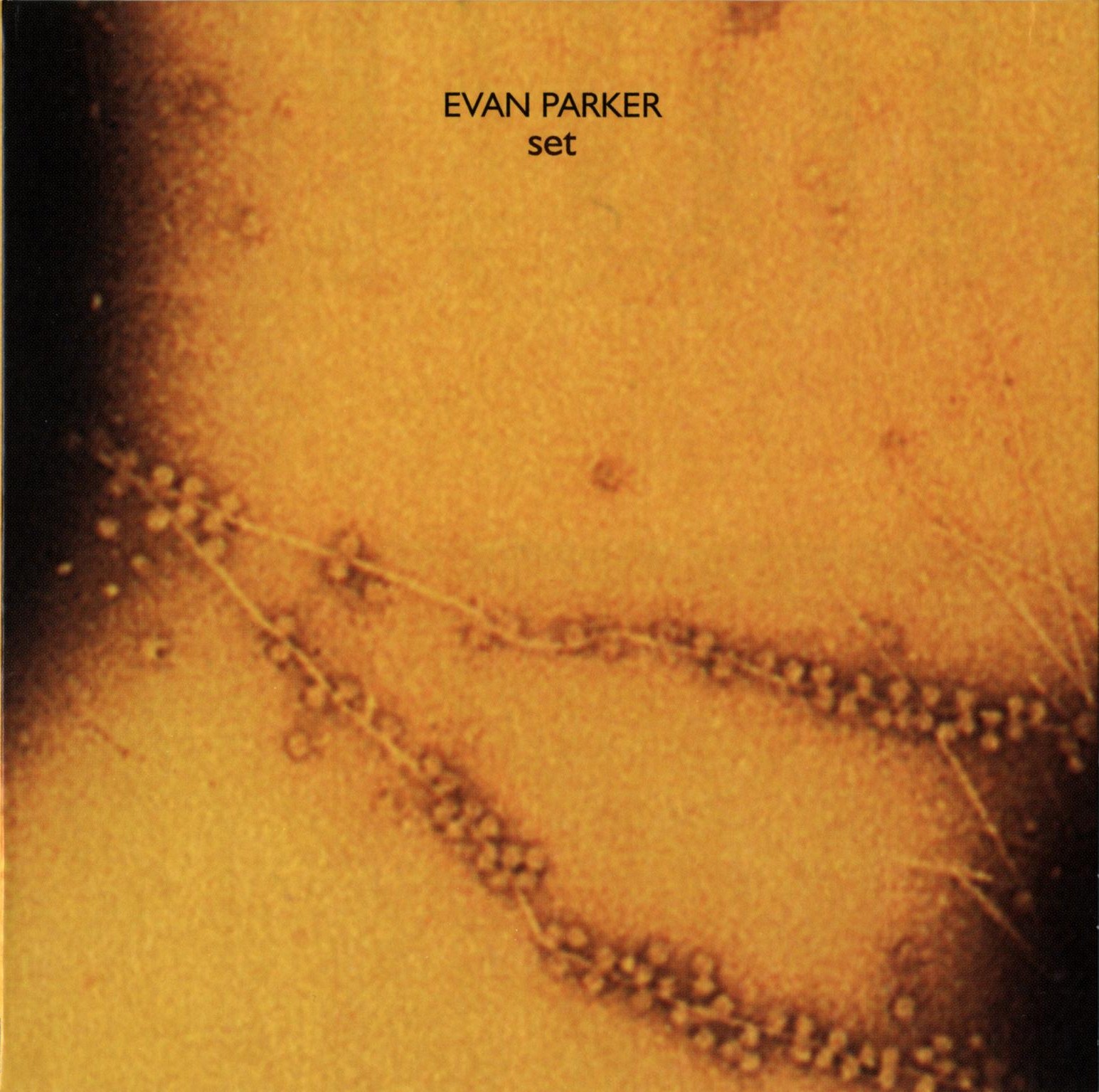
[This music] draws inspiration from the SET works of evolutionary biologist Lynn Margulis and is dedicated to her. SET (Serial Endosymbiosis Theory) convincingly explains biological evolution in terms of symbiotic associations of non-cellular organisms – bacteria and such. […] I hope that the resulting organism that is SET is more than the sum of its parts, and I thank these musicians for their generous creative input which turned my skeletal structures into fully fleshed music.

In [the large ensemble] fORCH we tend to function as a single ‘organ’ within the larger organism.
Much of the time, it can be hard to tell who is soloing, the conversation between us flowed so effortlessly. The four of us merged and played as one improvising organism. In this way, through playing together, we found an improvising solution to a band conundrum that many solve through arranging or composition.
It’s almost as if the timbres from all three are arising from one organism.
The ensemble collectively improvises phrases that are formed together as a singular element. The phrases are born together and continue on a cyclic journey, folding into themselves. They are constantly moving but also going nowhere.